


The Next Big Thing
The History of Tools Development Measures Human Evolution
Perhaps the most accurate and useful way to measure the history of human progress is to trace the stream of our TOOLS DEVELOPMENT. Tools are human-made devices and procedures created to deliver two things: (1) a repeatable manufactured output that has a useful purpose and (2) productivity enhancement (leverage). Underneath everything that makes up human existence, tools are the means by which needs and desires of civilizations advance.
Periodically, the TECHNOLOGY of a newly invented tool is significant enough to change the course of human existence. The United States’ catalog of such life-changing technologies includes the mass development of: Railways, Automobiles, Telephone/Telegraph, Electricity, Airplanes and the Internet. And now, everything required for adding Artificial Intelligence (AI) Technology to the life-changing list appears to be in place in the US.
New World Ingenuity
Early in the 17thCentury, the near-virgin territory that later became the United States of America began its European influx. That point in world history was surprisingly late, given that this vast, fertile, temperate land is situated between the earth’s two largest oceans that naturally protect it from military invasion.
Even more remarkably, the New World was occupied more by wild game than significant population clusters. Well-developed European societies, governments and their venturesome explorers simply laid claim to large swaths of the unexplored land they “discovered”. During the ensuing hundred years or so, European settlers constructed a new, prosperous nation and, in 1776, they declared and funded a self-governed republic that was independent from its European ancestry. During that process, the Americans conveniently ignored ownership claims made by sparse, local groups of people they called “Indians”. The settlers knew those native folk posed no serious threat, because they had neither an army nor firearms. And by 1800, after several million native-Americans had died of infectious diseases imported from Europe, various estimates claim that only about 600,000 of them were left in all of North America.
Probably because the New America was settled by mostly young and adventuresome people, their lifestyle naturally included a spirit of invention that was an American hallmark… an economic underpinning that flourished from then until now: it formed the vision, drive and financing to create tools that have materially altered the future of the existing world.
The Train Tool: Harnessing Steam to Move Goods and People
Early America was so vast that, compared to Europe, moving about by horseback and even horse-drawn wagons was slow and treacherous. It was therefore unsurprising that passenger rail service emerged first in America, about 1830. In both England and America, train engines were being built to harness the energy of steam created inside a giant rail-mounted, coal-fired boiler which powered the engine’s wheels. American steam-trains were the first in the world to offer passenger service.
By 1860, the railroads had grown to more than 30,000 miles of track and, in 1869, the celebrated Transcontinental Railroad was completed across the Rocky Mountains. That milestone opened a unique coast-to-coast trade and travel route that bonded the existing 37 United States with the vast, largely unpopulated mountain and west-coast territories. Only 20 years later, 1890, the industrious Americans had laid 160,000 miles of rails… more than the rest of the world, combined. Even now, a century-and-a-half later, freight trains still provide their heavy-hauling service to and from everywhere in the nation. But, in the late 20th Century, because the American landscape was so huge, its passenger rail service (outside of the populous northeast) largely became a tourist tool, giving way to millions of private automobiles and airplane travel modes.
The Lighting Tool Extended Daily Life and Productivity
In 1879, Thomas Edison famously invented (among many other things) the world’s first sustained electric light bulb. A single bulb could burn for up to 14 hours! Scholars and millions of others who read, studied and wrote by day were able to increase their productivity by at least 50 percent at night.
The Automobile Tool Delivered Unimagined Personal Mobility
While train transportation was flourishing in America, a German inventor, Karl Benz, patented and began production of the world’s first self-propelled “Motorwagen” in 1886. This first automobile was rudimentary; it was a platform seat situated on an axle between two large side wheels and a small, steerable front wheel.

Meanwhile, in America, wagon roads were rudimentary and pocked with ruts and washouts. Passenger trains were good and getting better. Hence, an entire decade rolled by before two Massachusetts bicycle mechanics designed and sold the first American gas-powered automobile in 1896. The notion of an individually-owned motor vehicle, for the relative few who could afford one, was an irresistible source of personal freedom that, on a mass scale, would surely become the next Big Tool.
In the first 9 years of the 20th Century, about 485 automobile companies were created to cash-in on the sudden American craving for cars. But, in 1906, Henry Ford famously designed and structured a completely novel tool: the world’s first mass-production factory; it consistently delivered a high-quality product that could be sold quite profitably at an astoundingly low price. From that launch, the US auto industry never looked back, largely because of an “auxiliary tool”…. the vast Interstate Highway System that began in 1954; it was and is perpetually funded by a user-tax on gasoline at the retail pump.
The Airplane Tool Fulfilled Human Yearning to Match the Birds
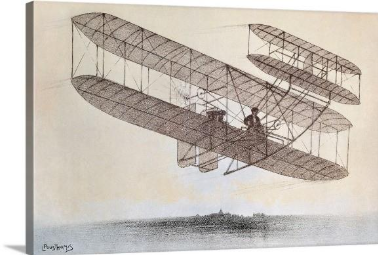
World history is packed with human strivings to copy the freedoms that every bird can demonstrate: controlled flight. At the very same time that Henry Ford was at work devising and constructing his mass production automobile factory, the Wright brothers (1903) were devising and testing a tool that would not only fly, but, like birds, it could also make controlled turns, changes of altitude and safe landings. By 1914, Florida’s Tony Jannus began the first paying-passenger service and airplanes began usage in Europe for World War One military surveillance. Today, we are accustomed to astronauts encircling the earth in orbit and making plans for establishing a permanent human presence on the moon.
The Internet Tool Opened Unlimited Information & Communication
In the early 1990s, the Internet (popularly known as the “Information Superhighway”) became widely available via two tools: 1. the World Wide Web [www] and 2. “browser” tools that provided a format for manipulating the Web. By mid-1990s, personal-computer tools were marketed for mass usage of the Web by almost anyone with a telephone line and electrical outlet; this explosion of users immediately led (1994) to the emergence of free “search engine” tools. (There were at least six such tools in wide use before the Google tool appeared in 1998.)
The Next Big Tool Might Surpass Human Control (at lightning speed)
Until now, manmade tools have always served the needs and wants of human masters, because commercially oriented risk-takers have always been the driving force behind tool-creation.
The most recently created, life-changing device is the Artificial Intelligence (AI) Tool. AI is not merely a next-logical-step. The AI tool potentially has unlimited ability to connect, configure and conjugate facts and intellectual notions to a degree that surpasses human limits. Meanwhile, we, the inventors of AI are limited to our personal box that defines our own conclusion-limits.
There is little reason to doubt that an AI tool could take over command and control of its functions without human supervision.
AI is designed to perpetually, 24/7, stuff itself with a limitless array of facts…. and to store the apparent relationships among and between the individual facts. So, the always unfolding AI memory-bank develops and provides not only its collected facts, but also its conclusions that could possibly turn into a real-world episode of The Sorcerer’s Apprentice.
For now, conclusions posted by AI are typically accompanied by a disclaimer: “AI responses may include mistakes”. For now, even if all AI systems have essentially uniform design, it is clear that all AI training sources are neither identical, nor uniformly processed, nor factually correct. Hence, there may well be quite a long time before that disclaimer can be removed. We can hope that AI Tool-training might soon be able to discover and un-learn its defective content.
As with all new tools that have gone before, we expect to develop enhancements for AI’s scope and the breadth of its usage. But this emerging tool has fundamental design elements that will allow it to instantly reference millions of facts (and alleged facts) and apply logic to develop conclusions that are beyond human decision-making. There is little reason to doubt that an AI tool could take over command and control of its functions without human supervision. Such an amazing capability would surely offer great promise; it also clearly unleashes a degree of threat that the tool could become uncontrolled and possibly destructive. (We presume that, if humans can maintain control over an AI tool’s energy source, the tool would be human-controlled.)
All of that being said, even when available forecasts are acknowledged to have a significant error rate, the un-quenchable human demand for forecasting (of almost everything) will surely demand and receive whatever conclusions AI produces about the future, despite its unspecific confession about its “mistakes”.
Unfortunately, there is no apparently developing technology aimed at minimizing or managing the historically permanent affliction of human war-making.
The Gold “Signal”
Given the spectacular 2025 Year of Gold price performance, we are continuing to follow its trail and the apparent causes. More recently, silver has been an even more spectacularly priced metal.
Review: Gold does not “perform”, because it has no income, or earnings and it pays nothing. In its convenient, daily-liquid format for investment (the GLD exchange-traded fund), its price change during 2025 was +63.7%. (And in 2024, it was +26.7%.)
Since 1971, the US Federal Reserve claims to hold 8,133 metric tons of gold bullion which, at today’s value, is worth more than $1 trillion. (Compared to the Treasury’s growing $38 trillion debt, the Fed’s gold horde is almost insignificant.)
Gold’s price is reflecting a multi-year continuous demand run-up by the world’s central banks. Since 2022, their gold purchases have been more than 1,000 metric tons per year, compared to an average 473 tons per year during the preceding 10 years. This recent buying surge is important because central banks are not speculators, they are long-term holders.
Typically, central banks hold other countries’ currencies to facilitate international trade; nearly all central banks therefore always own a significant amount of US Treasury bills and notes. But recently they own more gold than Dollars. Why are central banks selling US Treasury notes to buy gold? The most obvious answer is: in the 2020s, the US Government’s debt burden has grown larger than the size of the US economy (its GDP)… and that gap is growing. So, why are central banks buying gold instead of cryptos? For thousands of years, gold has been universally considered precious enough to act as an international currency. Gold has always been internationally considered to be a “monetary metal”… i.e., money.
During 2025, silver was even more sought after than gold. Its price ran up by 144.7% and, already in 2026, it has surged another 31.3% through January 16. Besides its traditional role as a currency metal in coinage, silver is an important element in building electronics and now, much in demand electric power plants.
Commentary
Commentary was prepared for clients and prospective clients of FiduciaryVest LLC. It may not be suitable for others and should not be disseminated without written permission. FiduciaryVest does not make any representation or warranties as to the accuracy or merit of the discussion, analysis, or opinions contained in commentaries as a basis for investment decision making. Any comments or general market-related observations are based on information available at the time of writing, are for informational purposes only, are not intended as individual or specific advice, may not represent the opinions of the entire firm, and should not be relied upon as a basis for making investment decisions.
All information contained herein is believed to be correct, though complete accuracy cannot be guaranteed. This information is subject to change without notice as market conditions change, will not be updated for subsequent events or changes in facts or opinion, and is not intended to predict the performance of any manager, individual security, currency, market sector, or portfolio.
This information may concur or may conflict with activities of any clients’ underlying portfolio managers or with actions taken by individual clients or clients collectively of FiduciaryVest for a variety of reasons, including but not limited to differences between and among their investment objectives. Investors are advised to consult with their investment professional about their specific financial needs and goals before making any investment decisions.
We welcome readers’ comments, questions, criticisms, and topical suggestions about our Commentaries, which always contain a mixture of researched facts and conclusions about their impact. We diligently strive to avoid controversial, or partisan views. However, our conclusions clearly cannot always align with our readers’ various interests and personal points of view.
The research topics and conclusions herein are not “FiduciaryVest, LLC viewpoints,” nor are they attributable to its individual employees.
Investment Risk
FiduciaryVest does not represent, warrant, or imply that the services or methods of analysis employed can or will predict future results, successfully identify market tops or bottoms, or insulate client portfolios from losses due to market corrections or declines. Investment risks involve but are not limited to the following: systematic risk, interest rate risk, inflation risk, currency risk, liquidity risk, geopolitical risk, management risk, and credit risk. In addition to general risks associated with investing, certain products also pose additional risks. This and other important information is contained in the product prospectus or offering materials.